To pick the best carton box die cutting machine, first write down your box sizes and materials. Make sure the machine fits your sheet size and works with your material. Look at what the tools can do, like cutting and creasing. Check if the machine makes every box the same way each time. See how to set up the machine, how fast it works, and if it is simple to use. Compare the technical details before you decide.
Key Takeaways
Know your box sizes and materials before picking a die cutting machine. This helps make sure the machine works well and saves time.
Learn about the three main types of die cutters. Flatbed is good for small jobs. Rotary is best for fast work. Digital is great for custom designs and flexibility.
Look at the machine's features like how it cuts and how easy it is to use. These features can help you work faster and make better boxes.
It is important to take care of the machine. Keep it clean and add oil so it does not get stuck. This helps the machine last longer.
Think about how many boxes you need and how much money you can spend. Pick a machine that gives you the features you need and fits your budget.
Carton Box Die Cutting Machine Types
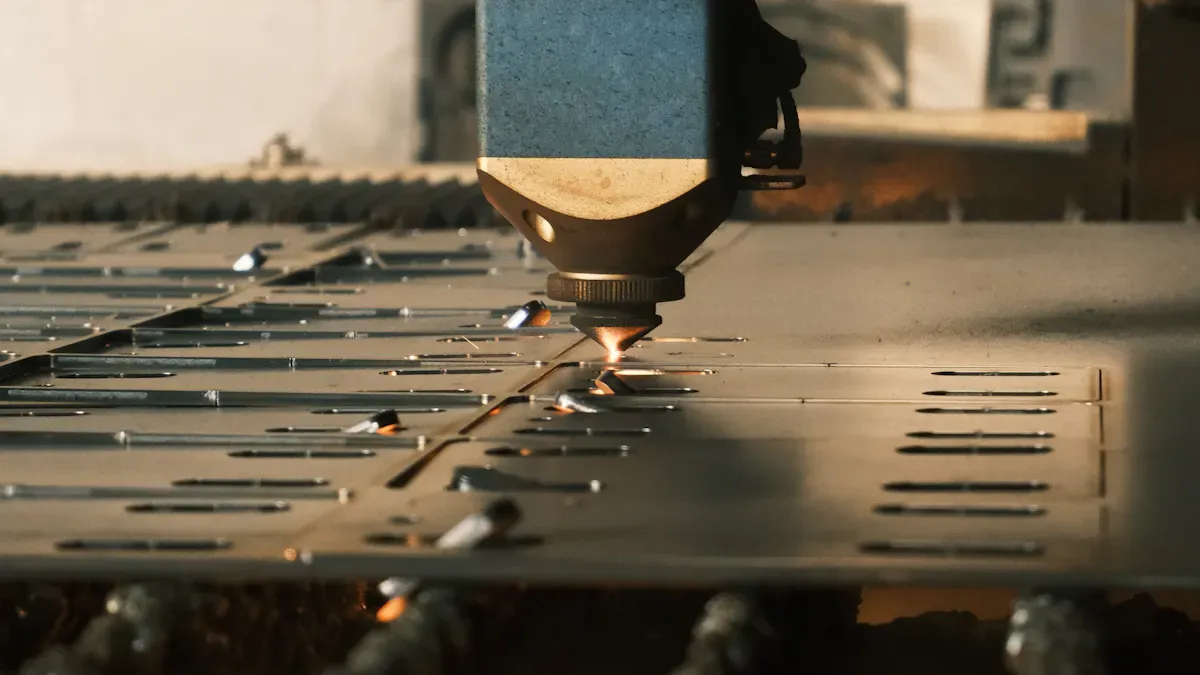
Image Source: pexels
You should learn about the main die cutter machines for carton boxes. Each machine is good for different jobs and amounts of boxes. There are three main types: flatbed die cutter, rotary die cutter, and digital die cutter.
Flatbed Die Cutter
A flatbed die cutter presses the cutting tool on a flat surface. This machine is good for making a small or medium number of boxes. It cuts with high accuracy, so it is great for detailed designs. You can use it to cut thick or hard materials. Many people use it for special packaging or making samples. The setup is easy and maintenance is not hard.
Rotary Die Cutter
A rotary die cutter uses a cylinder to cut as the material moves. This machine is best for making lots of boxes fast. It works at high speed and gives clean, sharp cuts. You can use it for store packaging, shipping boxes, and tricky shapes. It costs more and needs skilled workers. It can handle many materials and is good for big jobs.
Tip: Choose a rotary die cutter if you need to make thousands of boxes quickly.
Feature | Rotary Die Cutting Machines | Flatbed Die Cutting Machines |
Size and Configuration | Bigger, for making lots of boxes | Smaller, for few or many boxes |
Speed and Accuracy | Very fast, cuts are sharp | Slower, cuts are good for detailed shapes |
Material Handling | Feeds materials nonstop, handles many types | Feeds by hand or semi-auto, limited size/thickness |
Investment and Maintenance | Costs more, needs skilled workers | Costs less, easier to take care of |
Applications | Lots of standard packaging | Special shapes, unique packaging |
Digital Die Cutter
A digital die cutter uses lasers instead of physical dies. You can change designs fast because you do not need new tools. This machine cuts with the highest accuracy for tricky shapes. It is best for making a small number of boxes, samples, or custom packaging. It works with many materials and is quick to set up. Digital die cutters help you save time and money when you need to be flexible.
Digital die cutters do not use physical dies.
You can switch designs without stopping the machine.
These machines use printed marks to cut more accurately.
Best Use Cases for Each Type
Use a flatbed die cutter for small to medium jobs, samples, and special packaging.
Pick a rotary die cutter for big jobs, standard packaging, and tricky shapes.
Choose a digital die cutter for small jobs, custom packaging, and quick design changes.
You should pick the die cutter that fits your packaging needs. Think about how many boxes you make, the kind of packaging, and how often you change designs.
Selection Criteria for Die Cutter
Sheet Size and Material Compatibility
You should always check the sheet size your die cutter can handle. Write down the largest and smallest box sizes you want to make. Make sure your die cutting machine fits these sizes. If you pick a machine that is too small, you cannot cut bigger boxes. If you choose one that is too large, you may waste space and money.
Material compatibility matters a lot. Some die cutters work best with thin cardboard. Others can cut thick corrugated board. You need to match the die cutter to your packaging material. If you use many types of materials, look for a die cutter that can handle a wide range. This will help you avoid problems and keep your production smooth.
A good die cutter should do more than just cut. Look for machines that can do through cutting, kiss cutting, perforation, and creasing. These cutting techniques let you make boxes with windows, handles, or special folds. If you want high-quality cuts, check if the die cutter has sharp blades and strong pressure.
Some die cutters come with extra features. You may find machines with automatic feeders or waste removal. These features save time and reduce mistakes. If you use a digital die cutter, you can switch designs quickly without changing tools. This helps when you need to make custom packaging or short runs.
Repeatability and Registration
You want every box to look the same. Repeatability means the die cutter makes each cut in the same spot every time. Good registration keeps your designs lined up, even if you print graphics on your packaging. If you make branded boxes, this is very important. Test the die cutter with a few sheets before you buy. Check if the cuts match up and if the machine keeps the same quality for many boxes.
Setup Process and Ease of Use
You should pick a die cutter that is easy to set up and use. This saves you time and helps new workers learn faster. Look for these features:
Intuitive controls that make operation simple for everyone.
Easy die installation and material feeding to keep your workflow smooth.
Straightforward software for digital die cutters to help you change designs quickly.
If your die cutter is easy to use, you will make fewer mistakes and waste less material. This also lowers your training costs.
Technical Specs and Speed
You need to check the technical specs before you buy a die cutting machine. The most important specs are cutting force and maximum material thickness. Here is a quick guide:
Specification | Range |
Material Thickness | 0.5–6 mm |
Pressure Force (Tonnage) | 10 to over 100 tons |
Speed is another key factor. Rotary die cutting machines work very fast and suit high-volume packaging jobs. Flatbed die cutters move slower but give you better cutting precision. Digital die cutters offer flexibility and accuracy, but they may not match the speed of rotary machines for big jobs. You should match the speed of your die cutter to your production needs.
Cost and Space Needs
You must think about costs before you choose a die cutter. The price includes the machine, tools, and maintenance. Rotary die cutters cost more at first, but they save money if you make many boxes. Flatbed die cutters cost less and work well for smaller jobs. Digital die cutters can lower costs for custom packaging and short runs.
Do a cost-benefit analysis. Write down how many boxes you make, how often you change designs, and what features you need. This helps you pick the die cutter that gives you the best value.
Space is important too. Some die cutters are big and heavy. For example, a digital die cutting machine may need a footprint of about 1,335 x 1,065 mm and a height of 1,080 mm. Make sure you have enough room in your shop for the die cutter and for workers to move safely.
Tip: Always measure your space before you buy a die cutter. This prevents problems with installation and daily work.
By checking sheet size, material compatibility, tool functions, repeatability, setup, technical specs, speed, costs, and space, you can choose the right die cutter for your packaging business.
Matching Machine to Carton Box Needs
Image Source: unsplash
Custom Production
Sometimes your packaging needs change a lot. You may need a die cutter that can handle these changes. Each machine type has special features for different jobs. For custom boxes, pick a die cutter that lets you change designs quickly. It should also cut complex shapes. This helps you make unique boxes for your brand. Consistent die cutting makes your boxes look professional. It also helps your brand stand out. You waste less material, which is good for the planet. When choosing a die cutter for custom work, think about your skills. Look at the machine’s quality. Check how fast you need boxes. Make sure the machine can handle special designs.
Standard Runs
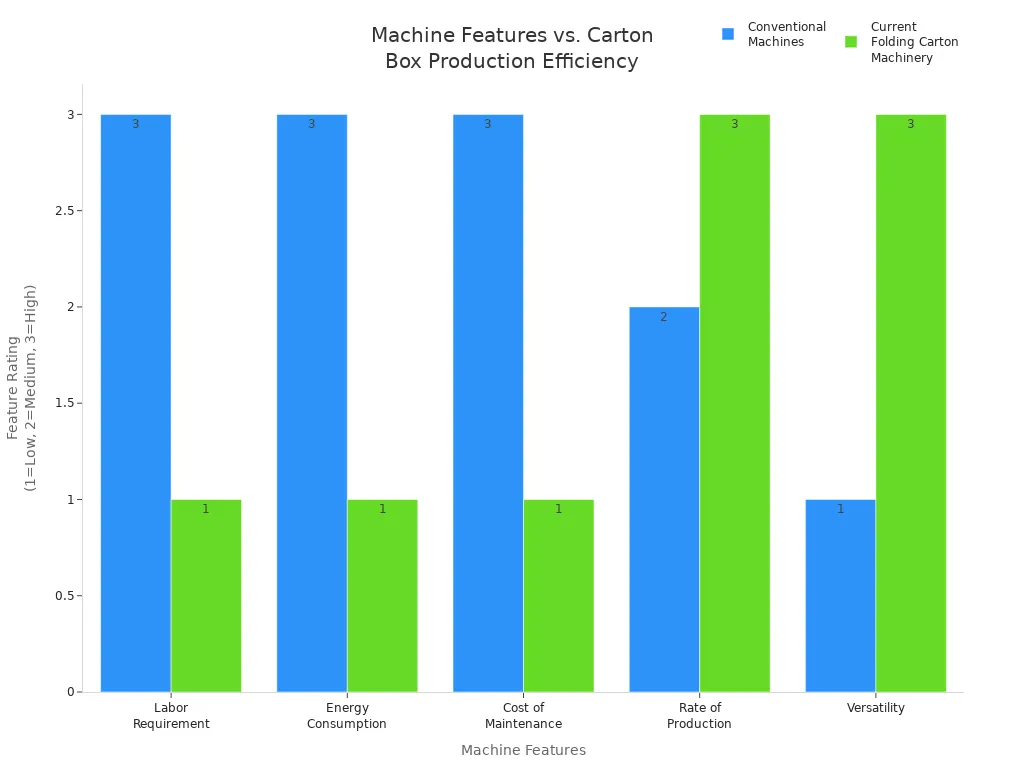
If you make lots of boxes that look the same, you need a die cutter made for speed. These machines use advanced features to save labor and energy. You get more boxes made and less downtime. The table below shows how new folding carton machines compare to old ones:
Features | Conventional Machines | Current Folding Carton Machinery |
Labor Requirement | High | Low |
Energy Consumption | High | Low |
Cost of Maintenance | High | Low |
Rate of Production | Medium | High |
Versatility | Low | High |
You should match your die cutter to your packaging needs. Think about how many boxes you make. Also, consider how often you change designs. For standard runs, rotary die cutters are usually best.
Prototyping and Short Runs
If you test new packaging or make small batches, you need a die cutter that is flexible. It should be easy to set up. Digital die cutters or laser cutters help you save money on short runs. Check for design limits, like leaving space around cuts to stop tearing. Different materials may need special settings. Check your tools often because short runs can wear them out. Good registration is important so your cuts match printed graphics. Try to recycle or reuse leftover material to manage waste.
Picking the right die cutter for your packaging needs helps you work faster. You save money and deliver high-quality packaging every time.
Maintenance, Training, and Safety
Maintenance Needs
You need to keep your die cutter working well. Lubricate moving parts every day, week, and month. Add engine oil to parts that move. This helps stop friction and overheating. Check the oil level in automatic lubricators often. Clean the feeding system, die, and counter die to avoid jams. Cleaning also keeps cutting quality high. Look at the dies for dull edges. Sharpen or replace them if needed. Adjust settings to keep cutting pressure steady. Watch for worn gears, belts, and other parts. Remove stuck material from the cutting area. Use a vacuum or tweezers to do this.
Maintenance Task | Description |
Dull Blade | Change the blade if it is worn or damaged. |
Misalignment of Dies | Make sure dies are lined up and tight. |
Lubrication | Oil all moving parts as the maker says. |
Cleaning | Keep the die cutter clean to stop jams and keep quality. |
Pressure Calibration | Set pressure for each material again. |
Doing regular maintenance makes your die cutter last longer. You avoid expensive repairs and keep production running smoothly. If you skip these steps, you may get bad cuts, more jams, and higher repair bills.
Operator Training
You can learn how to use a die cutter fast. Formal training is needed for safety and fixing problems. This is even more important for automated machines. Training teaches you how to set up the machine and spot issues early. Trained workers make fewer mistakes and keep packaging quality high.
Safety Features
Modern die cutters have safety features to protect you. Guards and sensors stop you from touching moving parts. Automated operation means less manual work and fewer injuries. Ergonomic controls help you stay comfortable and not get tired.
Safety Feature | Description |
Guards and Sensors | Stop you from touching moving parts while working. |
Automated Operation | Less manual work lowers injury risk. |
Ergonomic Controls | Makes using the machine easier and less tiring. |
Safety features help prevent accidents at work. Automation lowers mistakes and can cut damages by almost 30%. You get a safer workplace and less waste in packaging.
You can pick the right carton box die cutting machine by doing these steps:
Find out what packaging material you use.
Decide how many boxes you need to make.
Check how exact your cuts must be.
See how fast you can change designs.
Set your budget and running costs.
Measure the space you have for the machine.
Look for features that help automate work.
Choosing a carton box die cutting machine that fits your needs gives you many good things:
Benefit | Description |
Precision and Accuracy | Every carton box gets perfect cuts. |
Increased Productivity | You make more boxes in less time. |
Cost-Effectiveness | You spend less money on workers and materials. |
Flexibility | You can use many kinds of packaging. |
Design Flexibility | You can make special carton box designs. |
Think about each step before you buy a carton box die cutting machine. Planning carefully helps your business get the best results.
FAQ
What is the best die cutting machine for small businesses?
You should choose a flatbed or digital die cutter. These machines work well for small batches and custom designs. They cost less and need less space. You can also change designs quickly.
How often should you maintain your die cutting machine?
You should check and clean your machine daily. Lubricate moving parts every week. Replace worn blades or dies as soon as you notice problems. Regular care keeps your machine running smoothly.
Can you cut different materials with one die cutting machine?
Most modern die cutters handle many materials. You should check the machine’s specs for thickness and type. Some machines work best with cardboard, while others cut corrugated board or plastic sheets.
How do you improve cutting accuracy?
Tip: Always align your material before cutting. Use machines with good registration systems. Test with a few sheets first. Keep blades sharp and dies clean for the best results.


