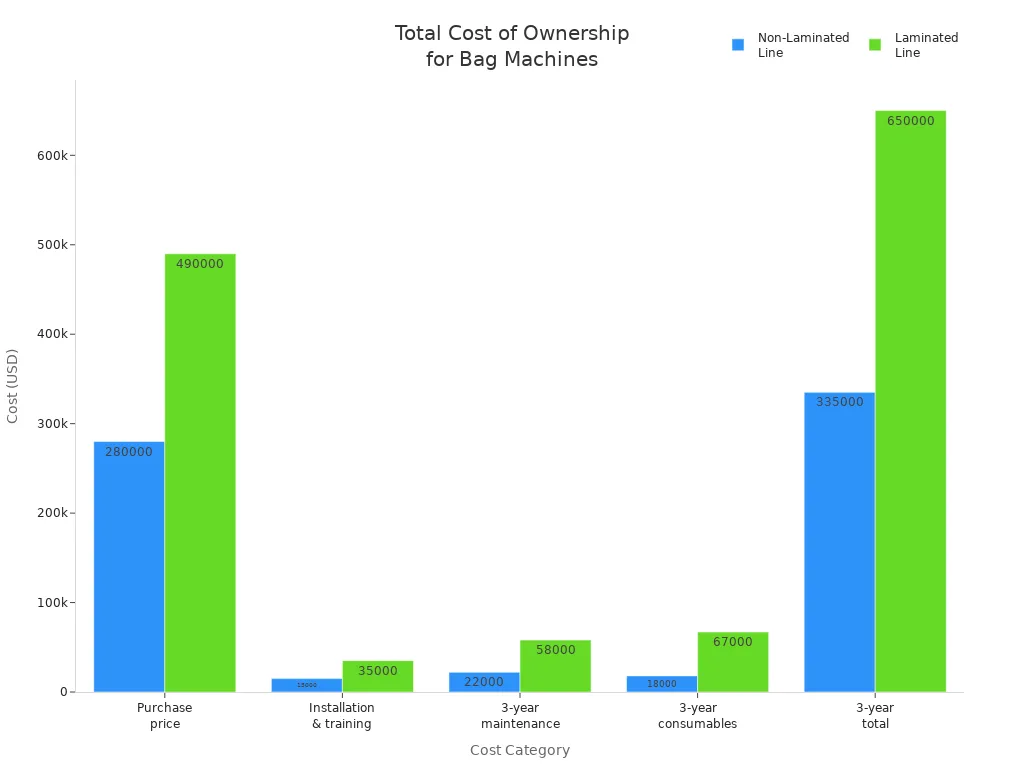
Total cost of ownership for non woven bag machines is not just the price you pay when you buy it. It includes all the money you spend from the beginning and during the machine’s life. Buyers need to think about the price, setup, regular maintenance, spare parts, and inventory. This helps them get the best value and make good bags.
Cost Category
Non-Laminated Line
Laminated Line
Purchase price
$280,000
$490,000
Installation & training
$15,000
$35,000
3-year maintenance parts
$22,000
$58,000
3-year consumables (inks, adhesives)
$18,000
$67,000
Operator training (estimated labor hours)
160 hours
480 hours
3-year total
$335,000
$650,000
The world market for these machines is growing quickly. By 2026, it could be $4.7 billion. By 2035, it might reach $5.8 billion. It grows about 7.5% every year. Knowing the non woven bag machine cost helps companies plan for the future.
Key Takeaways
Total cost of ownership means the price you pay, plus maintenance and running costs. Think about all costs to get the best deal.
Doing regular maintenance and keeping spare parts ready stops expensive downtime. A good maintenance plan helps you save money later.
Pick the machine that fits your production needs. Bigger machines may cost more at first but can help you save money over time.
Always look for hidden costs like compliance fees and tech upgrades. Planning for these costs can help you avoid surprises.
Keep track of your costs and how your machine works. Change your budget and plans to make sure you earn money for a long time.
Understanding Non Woven Bag Machine Cost
Initial Investment Overview
The first thing to do is learn about the initial investment. You need money to buy the machine and start using it. Many people pick non woven bag machines because they cost less than paper or cloth bag machines.
Semi-automatic machines are good for beginners. They are cheaper and simple to use.
Fully automatic machines can cost about $30,000 USD. These machines can make 24,000 bags in one shift.
The non woven bag machine cost changes with machine specifications and features. Machines with advanced controls or printing options cost more. Buyers should check what each machine does and pick what fits their needs. Some machines have basic controls. Others have extra features like printing or faster speeds.
The non woven bag machine cost is not just the price tag. Owners must think about long-term costs too. These include maintenance, spare parts, and replacement. Machines with better machine specifications and features may last longer and need fewer repairs.
Tip: Always check machine specifications and features before buying. This helps you choose a machine that fits your goals and budget.
Market Price Ranges
There are different types of non woven bag machines in the market. Prices change based on how automatic the machine is and its features. Here is a table showing typical price ranges in 2024:
Machine Type
Price Range
Entry-Level (Semi-Auto)
$8,000–$15,000
Mid-Tier (Auto with Basic Controls)
$18,000–$30,000
Premium (Fully Automated + Printing)
$35,000–$60,000+
High-speed models cost between $25,000 and $70,000. These machines usually have lower yearly maintenance costs and last 8 to 12 years. Low-speed machines cost less at first, from $8,000 to $20,000. They may need more repairs and last only 5 to 8 years.
Machine Type
Upfront Cost Range
Annual Maintenance Cost
Replacement Frequency
Hidden Costs
High-Speed
$25,000–$70,000
$2,000–$4,000
8–12 years
Moderate
Low-Speed
$8,000–$20,000
$600–$1,500
5–8 years
High
When comparing non woven bag machine cost, buyers should look at both the upfront price and long-term expenses. A machine with a lower price may seem like a good deal. But higher maintenance or hidden costs can add up over time. Picking the right machine specifications and features can help save money later.
Note: Always ask the supplier for a full cost breakdown. This helps you avoid surprises and plan your budget better.
Installation and Setup Expenses
Facility Preparation
Getting your building ready for a non woven bag machine is important. The machine needs a clean and dry area. There must be enough space for people to work safely. The floor should be flat and strong so the machine does not shake. Good lights help workers see what they are doing.
Some machines need special power connections. For example, a high-speed automatic machine might need three-phase power. You may have to call an electrician to set this up. If your machine uses inks or adhesives, you need good air flow. This keeps the air safe for everyone.
A checklist for getting ready includes:
Open floor space for the machine and supplies
Flat and strong flooring
Bright lights over work areas
Power outlets with the right voltage and type
Fans or vents if you use chemicals
Tip: Make a plan for your building before the machine comes. This can help you save money and time when setting up.
Shipping and Training
Shipping costs change based on the size and weight of the machine. Big machines may need special trucks or a forklift to move them. Some sellers add shipping in the price, but others do not. Always ask for a full shipping price.
Training is also a big cost. Workers need to learn how to use the machine safely. Most people can learn the basics in one or two days. Sellers often teach workers when they set up the machine. Learning how to fix problems and do maintenance takes more training. This helps stop mistakes and keeps the machine working well.
Basic use: One or two days of practice
Fixing problems: More training from the seller helps
Safety rules: Always taught at the start
Note: Good training helps stop accidents and keeps the machine running. Workers who know what to do can find problems early and keep things going.
Operating Costs and Production Capacity
Energy and Utilities
Non woven bag machines need electricity to work. They use power for motors, heaters, and controls. How much energy they use depends on the machine type. It also depends on how long the machine runs each day. High-speed machines use more power. But they can make more bags in less time. Some machines have features that save energy. These can help lower your electric bill. Energy-saving features include automatic shut-off and better motors. Good insulation also helps save power. Picking machines that use less energy can save money over time.
Some machines also need water or compressed air. Factories should check what utilities are needed before buying. Owners should look at their utility bills every month. This helps them see if the machine is working right.
Tip: Ask the supplier how much energy the machine uses each hour. This helps you plan your budget and look for ways to save.
Labor and Staffing
Labor is a big part of the cost to run these machines. Semi-automatic machines need more workers. Workers load materials, take out bags, and check quality. Fully automatic machines need fewer workers. But those workers need special training. Labor costs include pay, training, and sometimes extra pay for overtime.
A team with good training can find problems early. This keeps the machine running well. Training also helps workers stay safe and make fewer mistakes. Some factories use shifts to keep machines running longer. This can help make more bags without hiring more people.
Machine Type
Operators Needed
Training Level
Semi-Automatic
2–4
Basic
Fully Automatic
1–2
Advanced
Materials and Consumables
Materials and consumables are things used up while making bags. The main material is non woven fabric. It comes in rolls. Other items are inks, adhesives, and packaging. The price of these things can change. It depends on the market and the quality you want.
Buying a lot at once can lower the price for each item. Factories should keep enough materials in stock. This stops them from running out when they are busy. Using good materials can cut waste and make bags look better.
Note: Keep track of how much material you use for each batch. This helps you find ways to waste less and save money.
Impact of Production Capacity
Production capacity is the most bags a machine can make in a set time. This number shows how much a factory can make and how fast it fills orders. If a machine can make more bags, it helps meet customer needs. It also helps control labor costs.
Production capacity tells you the most bags you can make in a shift.
More capacity helps factories meet demand and control staff costs.
Knowing this number helps managers find slow spots and fix them.
A machine with high production capacity can help save money. It spreads fixed costs over more bags. This gives factories more ways to handle big or small orders. Owners should pick a machine that matches their business goals for the best results.
Maintenance and Spare Parts
Routine Maintenance
Regular maintenance and support help machines work well. Daily jobs stop sudden problems. Operators clean the machine and check for loose parts. They make sure everything moves smoothly. Each week, workers check cutting and sealing parts. This keeps the machine safe and accurate. Every month, workers look at belts, gears, and blades. These checks find damage early. Fixing small problems right away stops bigger repairs.
Clean and check the machine every day.
Calibrate cutting and sealing parts each week.
Inspect belts, gears, and blades every month.
A good maintenance and support plan lowers repair costs. It keeps production steady. It also helps workers know what to do and when.
Spare Parts Inventory
Keeping spare parts ready is smart for maintenance and support. Quick access to parts means repairs are faster. This reduces downtime and keeps the machine working. Common spare parts are belts, blades, sensors, and fuses. Factories should keep a list of needed parts. They should check their stock often. Good after-sales support helps companies get parts quickly.
Spare Part
How Often to Replace
Why Keep in Stock
Belts
Every 6-12 months
Prevents breakdowns
Cutting Blades
Every 3-6 months
Keeps cuts clean
Sensors
As needed
Ensures safety
Fuses
As needed
Avoids power issues
A strong maintenance and support system has regular checks. It also keeps spare parts ready.
Downtime Costs
Unplanned downtime costs a lot of money. When a machine stops, factories lose time and money. Downtime can cost $260,000 each hour. This includes emergency repairs and fast shipping for parts. It also includes missed delivery deadlines. Maintenance and support help stop these losses. Regular checks and spare parts keep machines running. This protects profits and keeps customers happy.
Tip: Spend money on maintenance and support. This helps avoid costly downtime and keeps your business safe.
Depreciation and Resale Value
Machine Lifespan
The lifespan of a non woven bag machine means how long it works well before you need a new one. Most high-quality machines last about 8 to 12 years. Cheaper models might only last 5 to 8 years. How you use and care for the machine changes its lifespan. Cleaning and doing maintenance often helps the machine last longer. If you use the machine for many hours every day, it can wear out faster.
Tip: Write down all repairs in a log. This helps you see how old the machine is getting and what has been fixed.
Depreciation Calculation
Depreciation means the machine loses value as time goes by. This is important for your budget and taxes. Many companies use the straight-line method to figure out depreciation. This way, the cost is spread out evenly over the machine’s life.
Example:
If you buy a machine for $40,000 and think it will last 10 years, you lose $4,000 in value each year.
Yearly Depreciation = Purchase Price ÷ Useful Life
Yearly Depreciation = $40,000 ÷ 10 = $4,000 per year
A table can show how the value drops every year:
Year
Book Value ($)
0
40,000
1
36,000
2
32,000
...
...
10
0
Note: Depreciation makes the book value go down, but the machine still works the same.
Resale Considerations
When you are done with your machine, you might want to sell it. The resale value depends on how old it is, what shape it is in, and the brand. Machines with good service records sell for more money. Popular brands usually keep their value better. Machines with new features or upgrades can get more buyers.
Checklist for higher resale value:
Keep all service records
Change old or broken parts
Clean the machine before selling it
Show off any upgrades
A higher resale value means you spend less money in the end. You get some money back when you buy a new machine or upgrade.
Hidden and Unexpected Costs
Compliance Fees
Factories have to follow rules from the government. These rules keep workers safe and protect nature. Owners pay money for permits and inspections. Sometimes, new laws mean machines or steps must change. These changes can cost extra money. For example, a factory might need filters to clean the air. Owners also pay for safety checks and paperwork. These fees are not always easy to see when you buy a machine.
Compliance Type
Typical Cost Range
Purpose
Safety Certification
$500–$2,000
Worker protection
Environmental Permit
$1,000–$5,000
Pollution control
Annual Inspection
$300–$1,200
Ongoing compliance
Note: Look up local laws before you buy a machine. This helps you avoid surprise costs and waiting.
Technology Upgrades
Machines get better as technology grows. Owners might need to upgrade software or hardware to keep up. Upgrades can make machines faster or help them make better bags. Sometimes, upgrades are needed for new customer needs. Upgrading costs money and workers may need new training.
Software updates help machines work well.
Hardware upgrades make machines faster and better.
New features might need extra parts or setup.
Owners should save money for upgrades. This helps machines stay modern and work well.
Emergency Repairs
Machines can break down without warning. Emergency repairs cost more than normal maintenance. Owners pay for quick shipping, special parts, and expert help. Repairs can stop work for hours or days. Lost time means less money earned.
Tip: Save some money for emergency repairs. This helps fix problems fast and keeps work going.
A factory with a good maintenance plan has fewer emergencies. Still, owners need to be ready for surprise costs. Emergency repairs can hurt profits and make customers unhappy.
Budget and Cost-Effectiveness Comparison
Comparing Machine Models
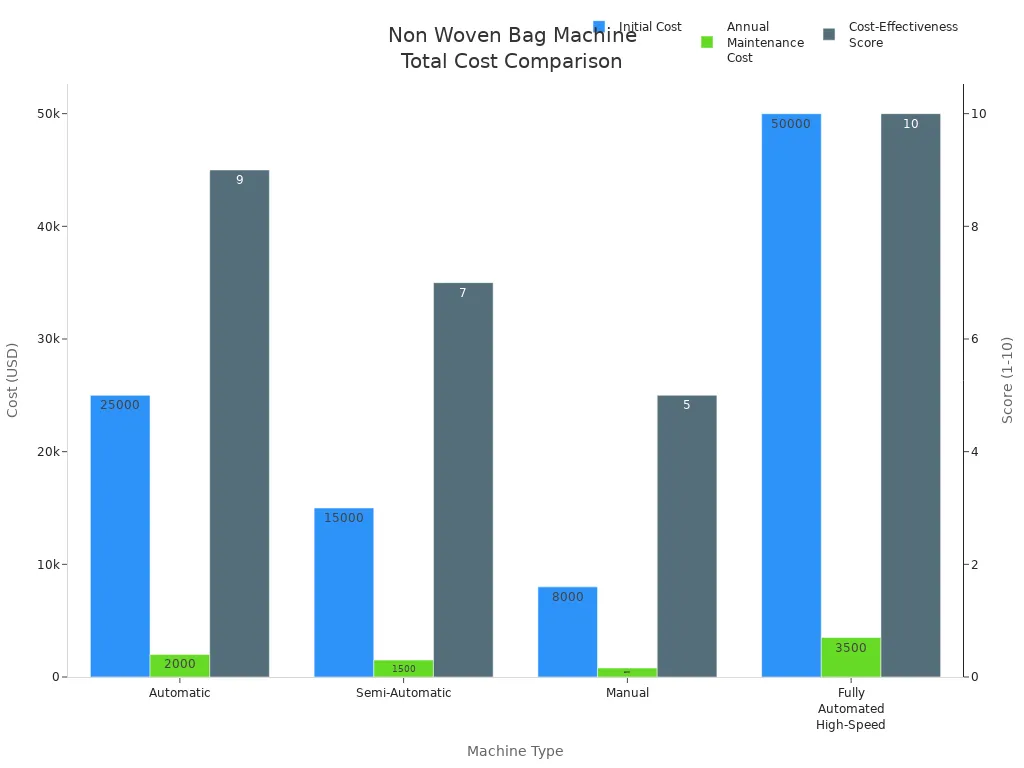
Picking the right machine helps you save money. Each machine type has its own costs and benefits. The table below shows how different machines compare. It lists how many bags they make, how much power they use, and what they cost. It also shows yearly maintenance and a score for cost-effectiveness.
When you look at machines, check the price and how many bags it makes. A more expensive machine can save money if it works faster and lasts longer. This helps you get more value for your money.
In-House vs. Outsourcing
Factories can make bags themselves or pay another company. Each choice changes your budget and cost-effectiveness.
Outsourcing can save money by using cheaper labor and sharing costs.
Outsourcing sometimes has hidden fees that are hard to see.
Think about what you need and add up all costs before you choose. This helps you keep your budget and cost-effectiveness in control.
Long-Term ROI
Long-term ROI means how much money you get back after all costs. Machines that make more bags and have better scores usually give better ROI. Doing regular maintenance and using resources wisely helps too. Keep track of what you spend and save each year. This shows if your budget and cost-effectiveness plan is working.
Tip: Check your costs every year. Change your plan if needed to keep your budget and cost-effectiveness strong.
Being smart with non woven bag machines means checking every cost. You should not just look at the price. Owners can spend less by using automation and doing regular maintenance. Lean manufacturing also helps save money. The table below shows how these ideas help:
Regular maintenance helps find problems early. It keeps machines working.
Making production better saves materials and money.
Planning for all costs stops surprises and helps your business grow.
Follow these steps to make a good budget and build a strong business.
FAQ
What is the average lifespan of a non woven bag machine?
Most machines work for 8 to 12 years. Cheaper models last about 5 to 8 years. Cleaning and maintenance help machines last longer.
How often should I perform maintenance?
Clean the machine every day. Check it every week. Inspect it each month to find problems early. Preventive maintenance stops breakdowns and saves money.
Are there hidden costs besides the purchase price?
Yes, there are extra costs. Owners pay compliance fees and technology upgrades. Emergency repairs also cost money. These costs can surprise buyers if they do not plan.
Can I upgrade my machine later?
Many machines can be upgraded. Owners add new software or hardware. Upgrades make machines faster and improve bag quality. Always ask the supplier about upgrade choices.