To compare non woven bag machine specifications, you need to look at production speed, automation, bag type compatibility, material needs, cost, manufacturer reliability, and compliance. First, think about what you want to make and what your business needs. The market for these machines is growing quickly because of new technology and more people wanting them. Picking eco-friendly and new machines, like ones from Oyang, helps your business do well. If you do not compare carefully, you might waste money or work less efficiently.
Key Takeaways
You need to know how fast the machine works and how much it can make. Fully automatic machines make more bags. Semi-automatic machines are good for small businesses.
Look at what types and sizes of bags the machine can make. A machine that makes many kinds of bags helps you sell to more people.
Check if the machine works with different materials and GSM levels. Picking the right fabric makes bags strong and long-lasting. This helps you keep your bags high quality.
Think about automation features to work faster. Machines with smart systems make fewer mistakes. They also help you make bags quicker and save money.
Choose machines that save energy and manage waste well. Machines that recycle and use less power cost less to run. They are also better for the environment.
Key Non Woven Bag Machine Specifications
Production Speed and Capacity
When you look at non woven bag machine specifications, start with production speed and capacity. These two things show how many bags you can make in a certain time. Most machines make between 40 and 120 bags each minute. You can see this in the table below:
Parameter
Typical Range
Production Speed
40 – 120 pcs/min
Production capacity changes with the machine type. Fully automatic machines can make hundreds of bags every hour. These machines keep the process steady and correct. Semi-automatic systems make fewer bags each day. They need more people to help, so they are good for small or medium businesses. Fully automatic machines do many steps at once. This means you get more bags with less work. Here is a comparison:
Machine Type
Production Capacity
Description
High Speed PP Woven Bag Making Machine
Hundreds of bags per hour
High-capacity models with steady results and little change.
Semi-Automatic Systems
Moderate daily output
Need people to help; best for small to medium companies.
Fully Automatic Machines
Increased speed and consistency
Do many steps together, so you need fewer workers and make more bags.
Oyang’s non-woven bag making machine is special because it can make lots of bags and change molds fast. You can switch bag types in only 20 minutes. This helps you fill different orders without waiting long.
Bag Types and Size Range
You should check what bag types and sizes a machine can make. Newer non-woven bag making machines, like Oyang’s, can make many kinds of bags. These include box bags, handle bags, D-cut bags, T-shirt bags, and more. The table below shows common bag types and what they are used for:
Bag Type
Description
Flat Zipper Bags
Flat bags with zippers to keep things safe.
Handbags
Bags with handles for easy carrying.
D cut handle Bags
Bags with a D-shaped cut for handles.
Window Bags
Bags with a clear window, often for clothes.
Rope Shoe Bags
Bags for shoes, with a string to close them.
Bottom Gusset Zipper Bags
Bags with a bottom gusset for heavier things.
Anti-Static/Laminated Bags
Extra protection for electronics or things that need to stay dry.
Most machines can make bags from 100 to 600 mm wide and 200 to 500 mm long. This lets you sell bags to many businesses, like stores or food delivery.
Material Compatibility and GSM
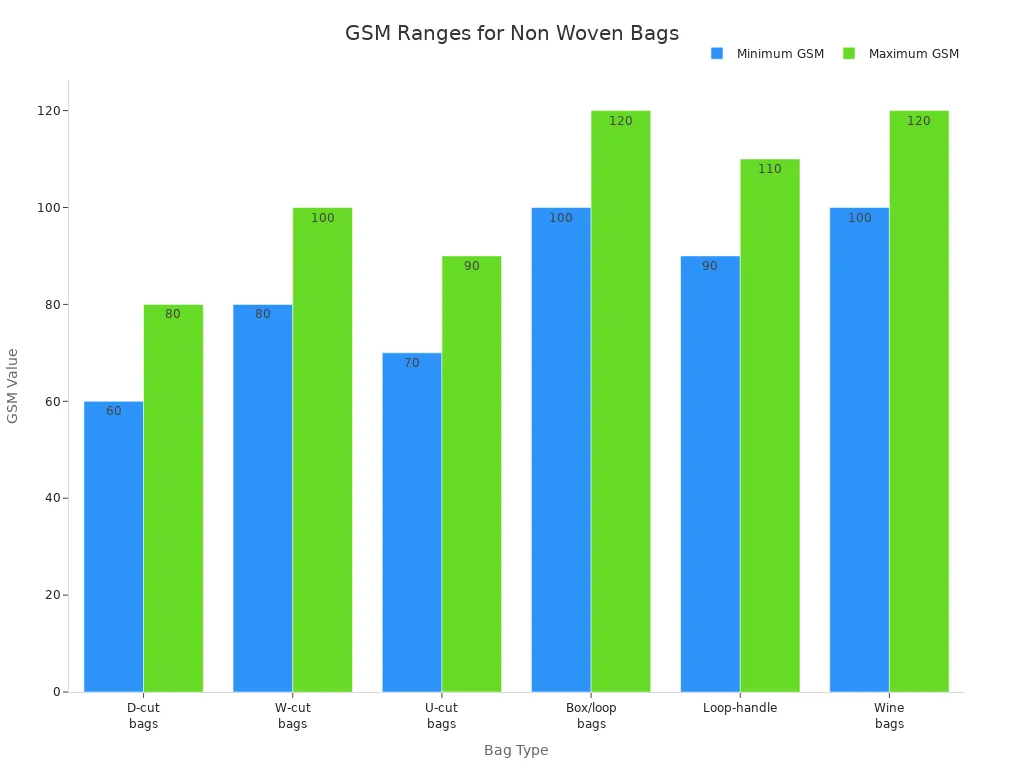
Material compatibility is very important for non woven bag machine specifications. You want a machine that works with different non-woven fabrics and can use many GSM levels. GSM means grams per square meter. It tells you how thick and strong the fabric is. The table below shows the GSM range for different bag types:
Bag Type
GSM Range
Description
D-cut bags
60–80 GSM
Light bags for stores and events
W-cut bags
80–100 GSM
Fancy bags for shops and gifts
U-cut bags
70–90 GSM
Useful bags for groceries and medicine
Box/loop bags
100–120 GSM
Strong bags for clothes and gifts
Loop-handle
90–110 GSM
Handles are stronger for heavy things
Wine bags
100–120 GSM
Laminated for water resistance and printing
Non-woven fiber is tough and lasts a long time. It makes bags that can be used every day. The material is light, so bags are easy to carry. Non-woven bags do not tear or let water in easily, so they last longer. You can print and color these bags to make them look nice. The material lets air move through, so things inside stay dry.
PP spunbond nonwoven fabric is both strong and light. It does not break easily. Picking the right non-woven fabric helps you make bags that are useful and good for the planet.
Automation Features and Detection Systems
Automation is a big part of today’s non woven bag machine specifications. Fully automatic machines have smart features to make your job easier and faster. Oyang’s non-woven bag making machine has smart detection and automation. You get features like:
Automation Feature
Description
PLC Touch Screen Interfaces
Easy to set size, speed, and check status right away.
Photoelectric Tracking
Keeps fabric and print marks lined up for good quality.
Automatic Counting and Stopping
Counts bags and stops the machine to stop making too many.
Integration of Sensors
Watches machine parts for quick fixes and problems.
Benefits of Automation
Makes production faster and more steady, and cuts mistakes.
Oyang’s fully automatic machines also pack, open, seal, and stack bags with little help from people. This saves money on workers and lets you make more bags. Smart detection systems check every bag to make sure it is good quality.
Energy Efficiency and Waste Management
Energy efficiency and waste management help save money and protect the earth. Oyang’s non-woven bag making machine uses less energy. The machine has low resistance and does not use much power. This saves you money on electricity and helps the environment.
Waste recycling systems make Oyang different from other brands. The machine collects leftover material while working. It recycles this waste, so you make less pollution and save materials. Here is how different recycling methods compare:
Recycling Method
Environmental Impact
Challenges
Mechanical Recycling
Turns used plastics into new things, helps the planet.
Needs energy for sorting, cleaning, and making new things.
Thermal Recycling
Uses heat to recycle mixed plastics, good for making new products.
Uses a lot of energy and costs more, but works for hard materials.
Incineration
Makes energy but gives off gases.
Needs better technology to lower pollution and work better.
Oyang’s waste recycling system uses mechanical recycling. This helps you lower pollution and follow industry rules. You get a machine that works well and is good for the earth.
By looking at these non woven bag machine specifications, you can pick a machine that fits your needs, makes many bag types, and helps the environment.
How to Assess Machine Specifications
Matching Specs to Production Needs
You need to pick machine specifications that fit your needs. First, think about how many bags you want to make each day. If you need to make a lot of bags, you should use a fully automatic machine. These machines move materials and can be programmed. If you make bags in batches, a semi-automatic machine is better. These machines are easy to change for different bag types. The kind of non-woven material you use is important too. Heavy geotextile or industrial filter bags need hot air welding. Lightweight spunbond bags for medical or hygiene use work best with ultrasonic welding. If you do not know which material to use, test it first.
Application Type
Recommended Welding Method
Heavy geotextile, CIPP felt, or industrial filter bags
Hot air welding
Lightweight spunbond for medical or hygiene products
Ultrasonic welding
Unsure or boundary materials
Material testing recommended
Pick a non woven bag making machine that matches your production and bag design. If you use the wrong machine, you might get jams or weak seals.
Evaluating Technical Data and Performance
Check the technical data for each machine. Look at how fast it works, what bag sizes it makes, and what materials it uses. Fully automatic machines make bags quickly and work well. Manual machines cost less but need skilled workers. Semi-automatic machines let you change bag types fast. Check the bag quality by looking at the seams and finish. Machines with smart detection systems help you avoid mistakes. Oyang’s non-woven bag making machine uses smart automation to make better bags faster.
Tip: Always ask for a sample run or demo before you buy a machine. This helps you see how the machine works and what the bags look like.
Customization and Versatility
Packaging needs change quickly today. You need a machine that can change fast too. Quick mold change lets you switch bag types in 20 minutes. This is good for making many SKUs and meeting customer needs. Oyang’s non woven bag making machine can make many bag types and sizes. You can make box bags, handle bags, D-cut bags, and more. Fully automatic machines save time and give you more options. Semi-automatic machines are good for small batches and custom orders. If you want to change your process, ask Oyang for help and options.
Quick mold change helps you make more kinds of bags.
Making many bag types lets you sell to more people.
Customizing your machine helps you meet special needs.
Always check if the machine works with the non-woven materials you want to use. Ask Oyang for help with customizing and technical support.
Comparing Brands and Manufacturer Support
Manufacturer Reputation and Reliability
When you look at brands, pick one that helps you use the machine well. You want a company that supports you if there are problems. Oyang is known for making good non-woven bag machines. The company sells most of these machines around the world. Oyang uses strong materials and follows strict rules. This makes their machines safe and last longer. Here is what you should check when picking a manufacturer:
Criteria
Description
Material Quality
Good materials make strong bags and a reliable machine.
Construction Standards
Safe and steady production comes from high standards.
Customization
The ability to change the machine for your bags and needs.
Verification Readiness
The company should show proof of quality and safety.
Commercial Terms
Fair terms help you trust the company.
Supply Reliability
You need a steady supply of machines and parts for smooth production.
Relationship Quality
Good service and support build trust over time.
Oyang does all these things. You get a partner who cares about your business and bags.
After-Sales Service and Warranty
After-sales service helps you keep your machine working well. Oyang gives you good service and support after you buy. You get help with setting up, learning, and fixing the machine. Here is what top brands give for warranty:
Manufacturer
Warranty Period
Coverage Details
Smart Pack Machine
5 Years
Frame and transmission systems covered for defects.
Union Nonwoven
1 Year
Free repair and parts for quality issues, lifelong maintenance, and spare parts at good prices.
Oyang gives you clear rules for taking care of your machine. You also get fast help when you need it. Good service means your machine stops less and you make more bags. You can count on Oyang to keep your work going.
Note: After-sales support means you get technical help, repairs, and training. This keeps your machine working well and your bags looking good.
Technical Support and Spare Parts
You need good technical help to keep your machine running. Oyang helps you before and after you buy the machine. You get advice to pick the right machine for your bags. After you buy, you get help with fixing and using the machine. Oyang gives you guides and training to learn how to use it. Their team helps you fix problems fast. You get spare parts quickly, so you do not have to stop making bags. This support helps your business grow.
Cost, Compliance, and Environmental Impact
Investment and Operating Costs
You should know the costs before picking a woven pp bag making machine. The biggest cost is for non-woven materials. Utilities like electricity and water also add to your bills. You will pay for workers and fixing machines too. Here is a table that shows the cost breakdown:
Cost Component
Percentage of OpEx
Raw Materials
70-80%
Utilities
5-10%
Other Expenses
Remaining percentage
You need money for machines like extruders and slitting machines. You also need the best woven pp bag making machine. Planning these costs helps you make bags without stopping. Oyang’s machine uses less energy. This means you pay less for power and save money.
Regulatory Compliance and Certifications
You must follow rules when using a woven pp bag making machine. Many countries have safety and environmental laws. The best woven pp bag making machine needs certifications like CE. It must also follow the 2006/42/EC directive. Oyang’s machines meet these rules. The company uses good standards and checks quality. Here is a table of important rules:
Region
Requirement
Impact on Design and Materials
North America
Safety and environmental
Must use sustainable materials
Europe
CE certification, 2006/42/EC
Strict safety and eco-friendly design
Asia-Pacific
Biodegradable focus
Non-woven bags must be recyclable
You should check these certifications before buying a machine. Oyang’s machines are ready to sell in many countries and meet world rules.
Sustainability and Eco-Friendly Solutions
You help the earth when you use a non-woven bag machine with green features. Oyang’s design makes bags you can use again and that break down over time. The way these bags are made cuts down on plastic trash and helps recycling. Non-woven bags take the place of single-use plastic bags. This means less pollution. The best woven pp bag making machine uses only non-woven fabric and works better. This leads to less waste and better production. Here are some good things:
Oyang’s non-woven bags can be used again and break down.
The machine helps recycling and uses less energy.
Better production means less waste.
Eco-friendly machines keep the planet safe and help you follow the rules. Oyang wants to make green packaging and protect the environment.
You can look at non-woven bag machine specifications by checking how fast it makes bags, what bag types it can make, what materials it works with, if it has automation, and if it saves energy. Make sure the machine matches what you need to make. Use a checklist to look at each feature of the non-woven machine. You can ask Oyang for help or see a demo. Contact them if you want special options or need technical help. If you compare carefully, you will pick the best machine, make more bags, and help the environment.
Keep in mind, picking the right non-woven machine means you make bags better and help the planet.
FAQ
What are the basic components and process of a non woven bag machine?
The machine has rollers, cutters, and sealing units. First, fabric goes into the machine. Next, the fabric gets cut to the right shape and size. Then, the machine seals the bags. Last, the bags are stacked and ready to use.
How do you ensure machine quality and features before buying?
Check what materials the machine uses. Look at the design and ask for a demo. See if the machine has automation and smart detection. Picking a good non woven bag machine manufacturer gives you better support.
What are the advantages of using a woven pp bag making machine?
You can make strong polypropylene bags fast. The best woven pp bag making machine saves money and energy. It also recycles waste. You get tough bags for many different uses.
How does a semi-automatic machine differ from a fully automatic one?
Semi-automatic machines need you to do more work. You must set up and run some parts by hand. Fully automatic machines do most jobs for you. This makes using a non woven bag machine quicker and easier.
Can you customize the design and size of bags with these machines?
You can change settings to pick the bag design and size. This helps you make bags for many needs. Customizing bags makes your business more flexible and meets customer requests.