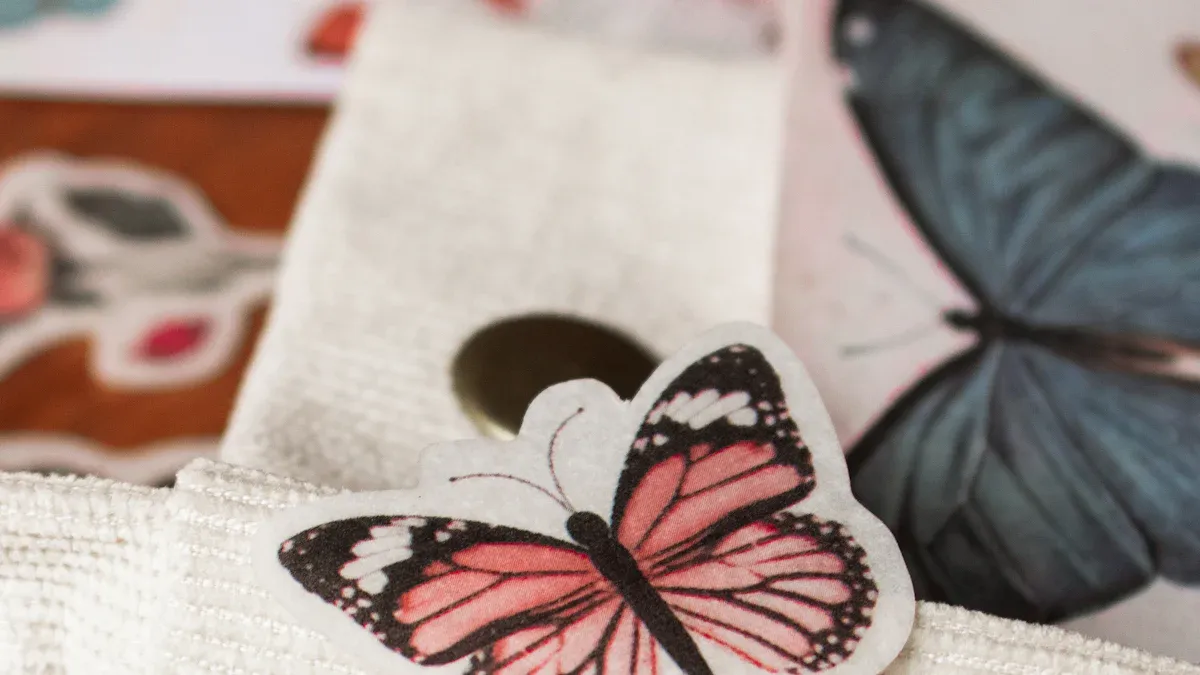
Die-cutting uses special machines to cut shapes from things like paper and cardboard. You can find die-cutting in packaging, printing, and other jobs. This process helps make shapes that look the same every time. Businesses use die-cutting because it is fast and makes good products. The world market for die-cutting machines keeps getting bigger and is worth billions of dollars. New machines, like Oyang's Die Cutting Machine, use smart automation and green technology. You use less energy, make less waste, and get perfect cuts each time. Better systems help you finish more work fast and keep customers pleased.
Key Takeaways
Die-cutting cuts exact shapes from things like paper and cardboard. This helps products look the same every time.
Using new machines like Oyang's can make things faster. It also helps use less material and makes fewer mistakes. This helps your business work better.
There are different ways to do die-cutting, like rotary and digital. These ways help with different projects. This gives more choices for making things.
Picking the best materials for die-cutting can make products better. It can also help save money. This gives better results.
Die-cutting services can save money and help the planet. They help businesses give customers green products.
Die-Cutting Basics and Key Concepts
What Is Die-Cutting
You see die-cutting everywhere. This method uses a sharp tool called a die to cut shapes from materials like paper, cardboard, or plastic. You can think of it like using a cookie cutter, but for packaging and products. The die presses down on the material and makes a clean, precise shape. You get the same shape every time, which helps you make products that look professional.
Here is a table that shows some important die-cutting basics and terms you should know:
| Principle/Method | Description |
| Die Usage | Uses special steel dies for accurate cutting. |
| Material Compression | Holds material steady for a clean cut. |
| Clean Cutting Edges | Sharp dies make smooth edges. |
| Waste Removal | Removes extra material to keep work neat. |
| Flatbed Die Cutting | Cuts designs on a flat surface with a press. |
| Clicker-Type Die Cutting | Uses a clicker press for soft materials like fabric. |
| High-Speed Die Cutting | Cuts quickly for big jobs. |
| Kiss Cutting | Cuts only the top layer, leaving the backing. |
You use die-cutting for many jobs. You can make boxes, labels, and even parts for cars or electronics. You can also cut fabric for clothes or shapes for crafts. The die-cutting basics help you understand how to get the best results for your project.
Why the Die Cutting Process Matters
You need the die-cutting process if you want products that look sharp and work well. This process gives you clean shapes and saves you time. You can make hundreds or thousands of items that all look the same. You also waste less material because the die cuts only what you need.
Here are some reasons why die-cutting matters for you:
You get fast production for packaging and labeling.
You can make parts for cars, planes, and electronics.
You can create shapes for arts, crafts, and textiles.
You can make medical and construction parts with exact sizes.
Tip: If you use a good die-cutting machine, you get better results and save money.
You may face some challenges with die-cutting. Sometimes the blade wears out, or the material tears. You might see cuts that are not the right size. You can solve these problems by checking your blades, adjusting the pressure, and keeping your machine in good shape. Here is a table that shows common challenges and how you can fix them:
| Challenge | Solution |
| Blade wear | Check and replace blades often. Use strong blades. |
| Material tearing | Change pressure or speed. Use backing material. |
| Inaccurate cutting dimensions | Align the die and check the material feed. |
| Inconsistent cutting pressure | Adjust pressure and keep the machine maintained. |
You see die-cutting in many industries. You use it for packaging, labeling, automotive parts, aerospace, textiles, electronics, medical devices, and construction. The die-cutting process helps you make products that are strong, neat, and ready for customers.
How the Die Cutting Process Works
Steps in Die-Cutting
First, you plan your design before die-cutting starts. This step is important because it decides how your product will look. You use computer software to make a dieline. The dieline is like a map for the shape you want to cut. When your design is ready, you make the die next. Skilled workers bend and shape metal rules. They put these rules on a die board to match your design.
Here is a simple list of the main steps in the die-cutting process:
Design Creation: You use CAD software to make a digital design. This design shows the shape and size you want.
Die Formation: You move the design to a die board. Metal rules are bent and placed to match your dieline.
Material Placement: You put the material, like paper or cardboard, on the die-cutting machine.
Cutting and Shaping: The machine pushes the die into the material. You can use different ways to cut, score, crease, or perforate, depending on what you need.
Waste Removal: The machine takes away extra material. You can collect and recycle this waste.
Finishing Touches: You might add printing, embossing, or other effects after cutting to finish your product.
Tip: Die-cutting can make boxes, labels, cards, and even parts for electronics or cars.
Each step in die-cutting helps you get a clean and exact shape. This method lets you make many pieces that all look the same. You also save material because the die only cuts what you need.
Oyang Die Cutting Machine Technology
Oyang Die Cutting Machines use new technology to make your work faster and easier. These machines use automation to keep your work moving. You do not need to stop and fix the machine a lot. This saves you time and lets you finish more jobs quickly.
Oyang machines have many good features:
You get very accurate cuts every time. The machines can cut as close as ±0.005 inches. This is important for electronics and medical devices.
The machines work fast. You can finish big orders without losing quality.
Oyang machines can cut many materials, like paper, cardboard, corrugated board, and PET film. This makes them great for industrial die-cutting.
You can use the machines for cutting, creasing, embossing, and printing. You do not need a different machine for each job.
The easy-to-use interface helps you set up jobs fast. You can change projects with little waiting time.
Oyang cares about the environment. The machines use less energy and help you make less waste, which is good for the planet.
Here is a table that shows how Oyang Die Cutting Machines are different from traditional machines:
| Feature | Oyang Die Cutting Machine | Traditional Die-Cutting Machine |
| Automation | Advanced | Basic or manual |
| Precision Die Cutting | ±0.005 inches | Wider tolerances |
| Speed | High | Moderate |
| Material Versatility | Wide range | Limited |
| Eco-Friendly | Yes | Rare |
| User Interface | Touchscreen, easy setup | Manual controls |
Note: Training your team to use these machines helps you get the best results. Skilled workers can find problems early and keep your work running well.
You can trust Oyang for industrial die-cutting because the machines give you the same results every time. You get high repeatability, so every product meets your needs. The machines also help you save money by using less energy and making less waste. If you want to make your packaging or printing business better, Oyang Die Cutting Machines give you the tools you need to do well.
Types of Die-Cutting Methods
You can pick from different die-cutting methods. Each method has its own good points. The best choice depends on your project. It also depends on the material you use. You should think about how many pieces you need.
Rotary Die-Cutting
Rotary die-cutting uses a round die that spins. The die moves over the material and cuts shapes. The material goes through the machine as the die presses down. This method is good for big jobs. Rotary die-cutting works fast with long rolls of material. You see rotary die-cutting in packaging, labels, and stickers.
Here is a table to help you compare die-cutting types:
| Die-Cutting Type | Speed | Scalability | Best For |
| Rotary | High | High | High-volume runs, continuous web materials |
| Flatbed | Moderate | Low | Thick materials, low-volume, detailed shapes |
| Digital | Variable | Moderate | Short runs, custom and intricate designs |
Tip: Rotary die-cutting is quick and good for large orders.
Flatbed Die-Cutting
Flatbed die-cutting uses a flat die to cut shapes. You put your sheet on the machine. The die comes down and makes the cut. This method gives you very exact cuts. Flatbed die-cutting is used for thick materials. It is also good for detailed shapes. You use it for small batches or special jobs.
Flatbed die-cutting is great for boxes, cards, and custom packaging. It is slower than rotary die-cutting. But you get sharp and clean edges.
Digital Die-Cutting
Digital die-cutting uses computer control to guide the cutter. You do not need a physical die for this method. The machine follows your digital design and cuts the material. You can make complex shapes with high accuracy.
Digital die-cutting is used for short runs. It is good when you want each piece to be different. This method is great for samples, prototypes, or special packaging. You can use it for paper, vinyl, and thin plastics.
Digital die-cutting helps you make detailed designs.
You can change designs without making a new die.
This method saves time and cuts down on waste.
Note: Digital die-cutting is great if you want flexible and exact results.
Die-Cutting Materials & Industry Applications
![Die-Cutting Materials & Industry Applications]()
Image Source: pexels
Materials for Die Cutting
You can use lots of materials in die-cutting. The material you pick changes how your product turns out. It also changes how much it costs. Picking the right material helps your machine work well. It also helps you waste less. Here are some materials you might use:
Paper: You see paper in boxes, cards, and labels. It is simple to cut and fits many jobs.
Fabrics: You use fabrics for special clothes and patterns. They bend easily and let you make cool designs.
Leather: Leather makes strong things like wallets or tags.
Wood: Thin wood works for crafts or small building pieces.
Metal: Metal is good for exact parts in machines or electronics.
Plastic: Plastic is used in boxes and product pieces. It is light and easy to shape.
Foam: Foam is used for padding and keeping things safe.
Digital die-cutting works with many of these materials. You can change your design fast and cut tricky shapes. This way, you save time and waste less.
If you choose the right material, you stop problems like machine jams or wasted supplies. For example, using liners that resist water keeps your label line moving. Using the same kind of paperboard helps you make better cartons.
Packaging & Printing Industry Solutions by Oyang
Oyang gives you smart ways to package and print things. Their die-cutting machines work with lots of materials, like cardboard, plastic film, and paper. You can use these machines for boxes, labels, and big posters. Oyang’s machines use smart tech to cut fast and very neatly.
Here is a table that shows what Oyang’s die-cutting machines can do:
| Feature | Description |
| High Precision | Advanced technology for accurate cuts every time |
| High Efficiency | Fast operation for mass production |
| Strong Stability | Robust design for long hours of use |
| Intelligent Operation | User-friendly controls for easy setup |
| Versatility | Supports many materials like cardboard and plastic film |
| Eco-Friendly | Uses less energy and reduces waste |
You can use Oyang’s machines in lots of jobs. These include making packages, finishing printed items, and making ads. You might see their machines making wine boxes, makeup packages, or product labels. Oyang also helps you be green. Their machines use less energy and smart systems to cut down on waste.
When you pick Oyang, you get machines you can trust. They help you do well in packaging and printing. You also follow safety and earth-friendly rules, so your business runs well.
Die Cutting Services vs. Other Fabrication Methods
Comparing Die-Cutting to Alternatives
When you compare die cutting services to other methods, you notice some big differences. Laser cutting and CNC routing are other ways to shape materials. Each method is good for certain jobs. You should learn about each one before you pick the best for your project.
Die cutting services are great for simple shapes and lots of pieces. You get quick results and the same quality every time.
Laser cutting uses a strong beam to cut many materials. It works well for detailed designs and small batches.
CNC routers use spinning tools to shape things. They can cut metal and thick plastic, but they are slower than die cutting.
Die cutting services need special dies. Making these dies takes time and costs more at first. Laser cutting does not need special tools, so it is faster for samples or small jobs.
You should also think about how much it costs and how fast you need your parts. Flatbed die cutting can be ready in a few days and costs less than $500. Rotary die cutting takes longer and costs more, but it is good for big orders. Class A tooling costs the most and takes the longest to make. Die cutting services help you save money over time because they use less material and need fewer workers. Automation makes things faster, so you can keep up with what customers want.
Here is a table that shows where die cutting services work better than other methods:
| Cutting Method | Best Suited For | Where Die Cutting Services Excel |
| Water Jet Cutting | Thick plastics, machine guards | Thin plastics, fast and precise at scale |
| CNC Machining | 3D metal parts, rigid enclosures | Flat metal shields, high-volume, consistent cuts |
| Laser Cutting | Intricate, low-volume metal parts | Repetitive, high-volume foil parts |
| Plasma Cutting | Thick metal parts | Thin films, avoids heat damage |
| Stamping | High-volume metal components | Non-metallic gaskets, precise cuts |
| Router Cutting | Large composite panels, varied depths | Thin labels, membrane switches |
| Slitting/Converting | Continuous rolls, straight cuts | Individual shapes like gaskets or pads |
| EDM (Wire Cutting) | Complex, high-precision metal tools | Soft materials, speed and scalability |
Note: Die cutting services can be used for small or big jobs. They work well for many types of projects.
Unique Benefits for Businesses
If you pick die cutting services, your business gets special benefits. You get shapes that are always the same, which is important for cars and planes. The process is fast, so you can cut hundreds or thousands of pieces quickly.
| Benefit | Description |
| Precision and Consistency | You get shapes that match every time, which is key for quality. |
| Efficiency | The process is quick, making it perfect for large orders. |
| Customization | You can create unique shapes and sizes for your products. |
| Material Optimization | You use less material, which saves money and supports sustainability. |
| Versatility | You can work with many materials, so you can serve different industries. |
| Cost-Effectiveness | The upfront cost pays off with long-term savings from less waste and lower labor costs. |
Die cutting services help your brand look special. Cool packaging shapes make your product stand out. Customers remember your brand when they see creative boxes. This can make people buy again and like your brand more.
You also help the planet. Die cutting services use less material and energy, especially with new machines. This helps your company be green and meet customer wishes for eco-friendly products.
Tip: If you want your products to stand out and your business to grow, die cutting services give you the speed, quality, and flexibility you need.
Die-cutting is important in packaging and printing. It helps you work fast and cut things very exactly. You can use it on many kinds of materials. When you use new machines like Oyang’s, you finish jobs faster and help the environment.
Here is a simple table that shows what each die-cutting technology does best:
| Technology | Strengths |
| Traditional | Makes lots of the same thing, lasts long, works for big jobs |
| Rotary | Cuts quickly, good for hard shapes |
| Digital | Easy to change, starts fast, can do many types |
Oyang gives you strong die-cutting machines that help your business do well.
FAQ
What materials can you use with die-cutting machines?
You can use paper, cardboard, corrugated board, cartons, plastic film, and even thin metal sheets. Each material works best for different products like boxes, labels, or packaging.
How do you keep die-cutting machines working well?
You should clean the machine often. Check blades for wear. Replace parts when needed. Follow the manufacturer's instructions for maintenance. This helps you avoid problems and get better results.
Why should you choose Oyang Die Cutting Machines?
Oyang machines give you high precision, fast speed, and eco-friendly operation. You can cut many materials. The user-friendly controls help you finish jobs quickly and save energy.
Can you use die-cutting for custom designs?
Yes! You can create unique shapes and sizes for your products. Digital die-cutting lets you change designs easily. You do not need to make a new die for every change.