When you pick a die cutting machine for custom packaging, you must choose the right type and features for your work and materials. The best machine shapes your packaging design. It also helps you reach quality standards in the packaging industry. Good technical support keeps your machine working well. Fast access to spare parts lets you fix and care for your machine quickly. These things help your die cutting machine give steady results and last longer. As a custom manufacturing tool, your machine is very important for your packaging to do well.
Key Takeaways
Pick the right die cutting machine for your needs and materials. This helps you make packaging that works well and saves time.
Die cutting gives you exact cuts every time. It lowers mistakes and makes your packaging look better.
Think about which die cutting machine fits your job size. Flatbed is good for detailed work. Rotary is best for making many packages. Digital is great if you need to change things often.
Keep your die cutting machine clean and working well. Train workers so they know how to use it safely.
Good help and fast spare parts can stop long breaks. This keeps your packaging work going without problems.
Die Cutting Machine for Custom Packaging: Basics
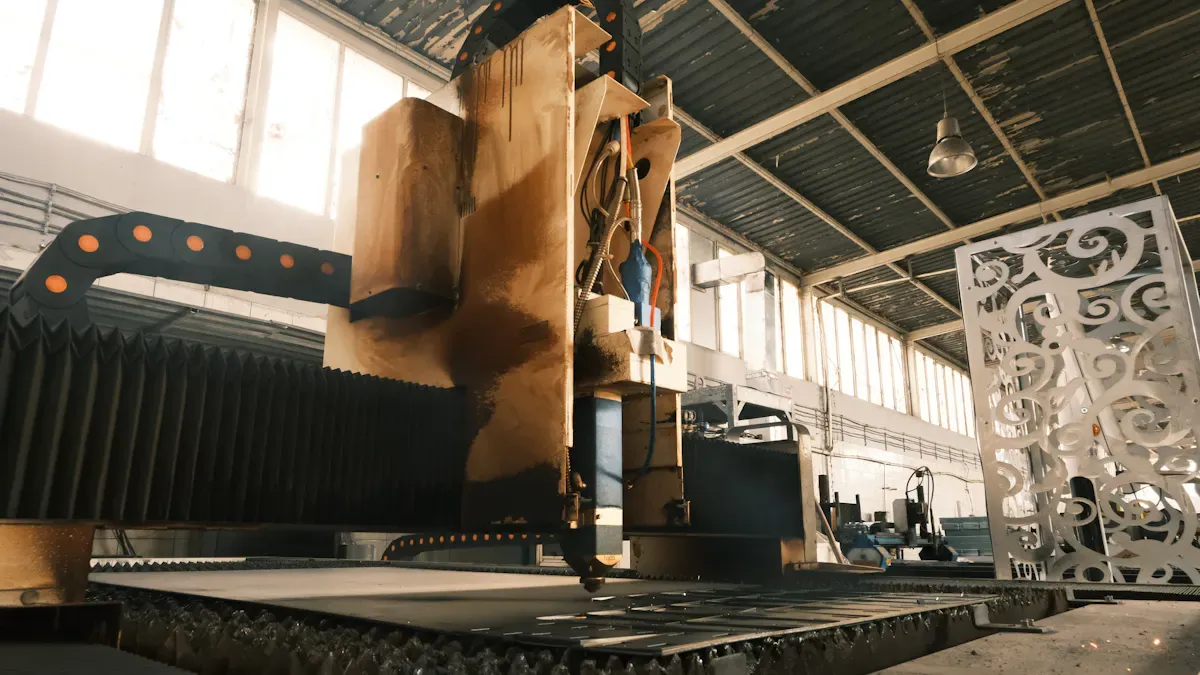
Image Source: pexels
What Is Die-Cutting
Die-cutting shapes packaging materials into special designs. The process starts with a die, which works like a cookie cutter. You use computer-aided design (CAD) to make the packaging outline. The die is made to fit this outline. You put together the die and machine parts before starting production. The die cuts or scores the material. This gives you the exact shape needed for custom packaging.
Die-cutting lets you make exact shapes and lowers mistakes in packaging design. You can make packaging that is different and grabs attention.
Die-cutting uses different methods:
Scoring: You make weak cuts or marks for easy opening.
Creasing: You help paperboard bend and fold into shape.
Perforating: You make small holes for easy tearing.
These ways help you make packaging that is simple to use and looks neat.
How Die Cutter Machines Work
A die cutting machine uses a metal die to press into materials. You run the machine to cut, score, or crease packaging with exact sizes. The machine acts like a big cookie cutter. It makes shapes, patterns, and designs that fit your needs.
The machine presses the die into the material for exact cuts.
You can make packaging with steady quality and look.
The machine works with paperboard, cardboard, and plastic.
Die-cutting machines let you control the packaging process. You can change the machine settings to fit your needs. This helps you make custom packaging quickly and with less waste.
Using die-cutting makes your packaging look better and work well. You also save time and money by letting the machine do the cutting.
Key Benefits of Die-Cutting in Custom Packaging
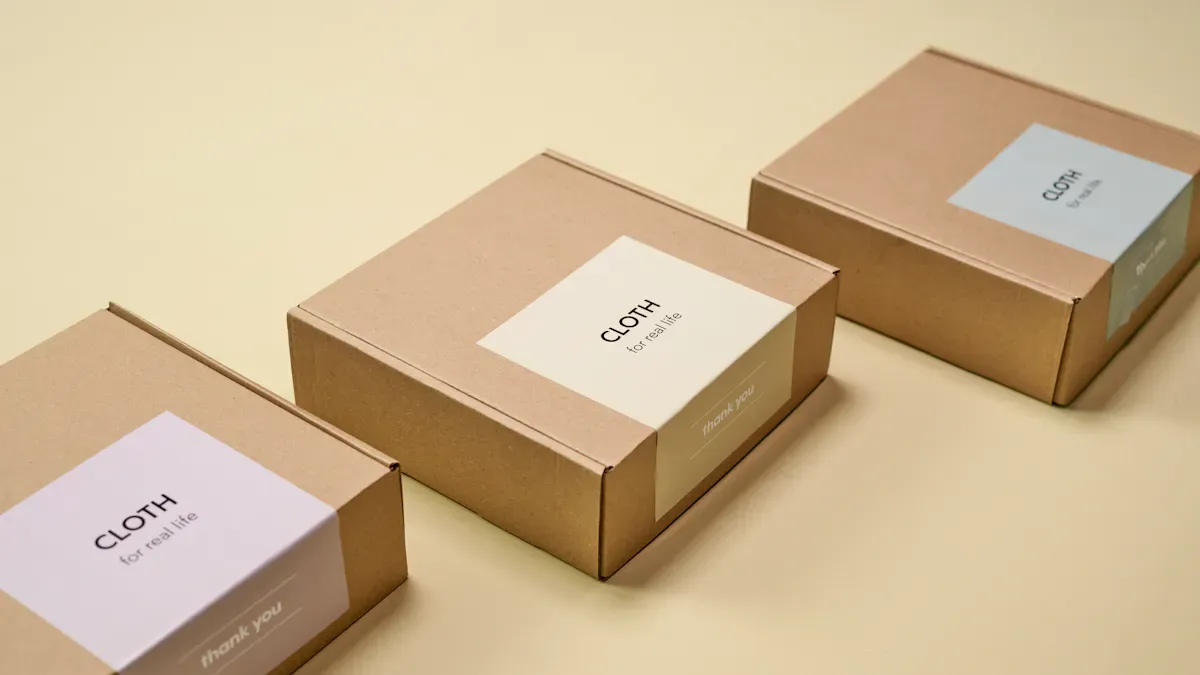
Image Source: pexels
Precision and Consistency
You want each package to look the same. Die-cutting gives sharp edges and exact shapes. Using a die cutting machine stops mistakes from hand cutting. The process helps you make packaging that stands out.
Die cutting makes accurate cuts for detailed designs.
You get the same results for every package.
The machine works with many materials for different styles.
This control means your custom packaging always matches your brand.
Custom Shapes and Flexibility
You can design packaging that fits your product well. Die-cutting lets you make shapes that are hard to cut by hand. The machine works with many materials, so you can try new ideas.
Die cutting lets you make complex shapes for special packaging.
You can change sizes and designs for your brand.
The machine gives uniform cuts for big orders.
With die-cutting, your packaging grabs attention and shows your brand’s message.
Efficiency and Cost Savings
You save time and money with a die cutting machine. The machine works fast and cuts many pieces at once. This makes die cutting good for big jobs. You get quality packaging without wasting materials or labor.
Tip: Die-cutting keeps costs low and makes sure every package meets your standards.
Manufacturers say die cutting saves money and boosts efficiency. You can trust the machine to give quality packaging for every order.
Types of Die Cutter Machines
Picking the right die cutter machine helps you make custom packaging. You can choose flatbed, rotary, or digital machines. Each one works best for certain jobs and materials. You should learn how each machine works and what it can do.
Flatbed Die Cutting
Flatbed die cutter machines press a flat die onto a sheet. This machine is good for detailed designs and tight spaces. It works well with thick and stiff materials. You can cut cardboard, corrugated board, and some plastics. Flatbed machines let you switch jobs fast. This saves time when you need new designs.
Here is a table that shows how flatbed die cutter machines work with different materials:
Material Type | Thickness Range | Stock Range |
Corrugated Sheet | Up to 7mm | Single flute, double wall BC, BE |
Solid Board | 200-2000gsm | Minimum 200gsm |
Semi-rigid Plastics | Up to 4mm | N/A |
Flatbed die cutting gives you very exact cuts. You can make folding cartons, strong packaging, and special prints. The tooling costs are lower, so this machine is good for small and medium jobs.
Tip: Flatbed die cutter machines help you make packaging with sharp edges and fine details.
Rotary Die Cutting
Rotary die cutter machines use round tools. The machine moves in a steady, rolling motion. You use rotary die cutting for big jobs. The machine works with thin and bendy materials like folding cartons and labels. Rotary machines are fast and give steady results.
Here is a table that compares flatbed and rotary die cutter machines for job size and material thickness:
Type of Die Cutting Machine | Best Suited For | Material Thickness | Production Volume |
Rotary Die Cutting | High-volume | Up to 0.015" | Large production runs |
Flatbed Die Cutting | Low to moderate volume | Up to 0.5" | Moderate volumes |
Rotary die cutting machines cost more for tooling. It takes longer to switch jobs. This machine is best for making lots of simple shapes.
Note: Rotary die cutter machines help you finish big orders quickly. You can use them for folding cartons, labels, and flexible packaging.
Digital Die Cutting Machines
Digital die cutter machines use special cutting heads or lasers. You do not need physical dies for these machines. You can change designs fast. This machine is good for making samples and small batches. Digital machines are great for testing new ideas and making different designs.
Here is a table that shows how digital die cutter machines compare to older methods:
Feature | Digital Die Cutting Machines | Traditional Die Cutting Methods |
Setup Time | Much shorter | Longer because of physical dies |
Changeover Flexibility | High (cuts right away) | Low (needs new dies) |
Tooling Costs | None | High (physical dies cost more) |
Lead Times | Very short | Longer |
Prototype Turnaround Time | 20 minutes | Can take much longer |
Digital die cutting machines are slower than other machines. They are best for small jobs and changing designs often. The machine works with only some material thicknesses. You save time and money on setup and tools.
Callout: Digital die cutter machines help you try new packaging ideas fast. You can change designs without waiting for new dies.
Comparison Table
Here is a table that compares flatbed, rotary, and digital die cutter machines:
Feature | Flatbed Die Cutting Machines | Rotary Die Cutting Machines | Digital Die Cutting Machines |
Operation | Presses a flat die onto a sheet | Rolls with round tools | Uses cutting heads or lasers |
Speed | Slower, good for small jobs | Faster, best for big jobs | Slower than other machines |
Precision | Very exact, good for detailed work | Good for simple shapes | Varies, usually less exact than other machines |
Material Compatibility | Best for thick and stiff materials | Works with thin and bendy materials | Only works with some material thicknesses |
Tooling Cost | Lower, good for small jobs | Higher, lasts longer for big jobs | Less money needed up front |
Changeover Time | Fast to switch jobs | Takes longer to switch jobs | Not needed |
Typical Applications | Folding cartons, strong packaging, special prints | Big runs of folding cartons, labels | Samples, small jobs, changing designs |
Which Machine Should You Choose?
Flatbed die cutter machines are best for custom packaging with detailed designs and thick materials. Use them for medium jobs and special work.
Rotary die cutter machines are good for big jobs. Use them for folding cartons, labels, and flexible packaging.
Digital die cutter machines are great for samples and small jobs. You can change designs fast and test new ideas.
Tip: Pick your die cutter machine based on how much you need to make and what materials you use. This helps you get the best custom packaging.
Choosing the Right Die Cutting Machine
Assessing Production Needs
You should think about what your company needs before picking a die cutting machine. First, look at how big your company is and how much money you can spend. Think about what kinds of products you make and how many you need to make. Decide how exact your packaging must be. Check if you need every batch to look the same.
Look at your company size and money.
Write down your product types and packaging needs.
Decide how exact you want each package.
Guess how many packages you need for each order.
You also need to compare machines from different countries. Some machines are more exact or work better. Service and spare parts are important too. Make sure you can get help and parts fast if your machine breaks.
When picking a die cutting machine, check if it works with your materials. Use the table below to see which machine fits your material:
Material Type | Typical Machine Requirement |
Thin Paper | Manual or Semi-automatic; needs low, adjustable pressure to prevent crushing or tearing |
Coated/Mid-Weight Board | Semi-automatic or Automatic; needs consistent, even pressure for clean scoring and cutting |
Thick Board | Flatbed machine with strong pneumatic or hydraulic pressure for clean cuts |
Specialty Papers | Needs high precision registration and gentle handling to avoid cracking |
Functional Papers | Needs clean cutting and special die materials to prevent sticky residue |
Always check how much pressure the machine can use. Make sure it can cut thick materials and also work softly with thin ones. If you use the wrong machine, your materials may wear out faster. This can make repairs cost more and your machine not last as long.
Evaluating Cutting Quality and Accuracy
You want your packaging to look neat and nice. The die cutting process must give clean cuts and steady results. Pick the right material for your packaging. Design your packaging so die cutting works well. Make sure your machine can handle small details.
Choose the best material for your packaging.
Design your packaging for easy die cutting.
Keep your machine in good shape with regular care.
Use strict checks to keep cuts tight and waste low.
Quality checks help you find mistakes early. You can fix problems before they hurt your packaging. Regular care keeps your machine working well. Dull cutters can mess up your packaging and upset customers.
Tip: Check your packaging after each batch. Make sure your die cutting machine gives you the accuracy you want.
Budget, Service, and Spare Parts
Your money decides which die cutting machine you can buy. Die cutting costs more at first but saves money for big jobs. Laser cutting costs less to start but more for each package. It works best for small jobs or one-time projects.
You need to think about service and spare parts. OEM parts come with warranties and good quality. Aftermarket parts cost less but may not last as long. You must balance your money with how reliable the parts are.
Getting spare parts fast keeps your machine running. Good service helps you fix problems quickly. This cuts down time when your machine is not working and keeps your packaging orders moving.
Brand Reputation and Technical Support
Brand reputation is important when picking a die cutting machine for custom packaging. Good machines from trusted brands give better results. Bobst and Heidelberg are known for their exact cuts and smart technology. Bobst machines help you get steady production. Heidelberg machines help you use less material and work better. JWEI makes strong and affordable machines.
Bobst machines give you exact cuts and steady work.
Heidelberg machines help you save materials and work better.
JWEI machines are strong and cost less.
Technical support keeps your machine working well. Regular care with expert help stops breakdowns. Good care makes your machine and parts last longer. If your cutters get dull, your packaging quality drops. Good support helps you fix problems fast.
Note: Pick a machine from a brand with good technical support. This helps you avoid downtime and keeps your packaging quality high.
Features and Best Practices for Die-Cutting
Key Machine Features (Force, Speed, Safety)
When picking a die cutting machine for packaging, you should focus on important features. These features help your machine work well and keep your team safe. Cutting force and precision are needed for high precision cutting. You need a machine that fits your material and job size. The table below shows how machines compare:
Feature / Metric | Flatbed Die Cutting | Rotary Die Cutting | Laser Die Cutting | Digital Knife (Oscillating) |
Cutting Force (Tonnage) | Very High | Low to Medium | N/A | N/A |
Setup & Changeover Time | Moderate | Long | Very Short | Very Short |
Cut Edge Quality | Excellent | Excellent | Potential Burn/Melt marks | Excellent |
You should also look for automatic feeding, servo-driven motion, and CCD visual positioning. These features make the machine faster and more efficient. Safety features like guards and emergency stops protect operators. The power source changes how the machine works. Hydraulic systems give strong force for thick materials. Pneumatic systems work faster but with less force. Electric systems give clean and precise cuts for sensitive packaging.
Tip: Always check if your machine has good safety features and easy controls.
Integration and Maintenance
You need to add your die-cutting machine to your packaging line for smooth production. Start by planning your workflow for easy material movement. Use process automation and real-time monitoring to make things faster and better. Lean manufacturing helps you cut waste and improve how things work.
Regular maintenance keeps your machine working well. Clean the machine often to stop debris from causing bad cuts. Lubricate moving parts every day to reduce wear. Check blades each week to make sure they are sharp. Check rollers every month to keep materials moving smoothly.
Cleaning stops debris from building up.
Lubrication every day lowers friction.
Weekly blade checks keep cuts sharp.
Monthly roller checks help materials feed smoothly.
Note: Good maintenance and integration help your die-cutting machine last longer and keep your packaging quality high.
Operator Training
Operator training is important for safe and efficient die-cutting. You must teach your team about machine features and how to use them. Training covers machine abilities, safety, and start-up and shutdown steps. Operators learn how to feed materials and adjust settings for easy use. They also practice emergency steps and basic maintenance.
Learn machine functions and features.
Follow all safety rules.
Use correct start-up and shutdown steps.
Feed and adjust materials for good cuts.
Know what to do in emergencies.
Understand basic maintenance.
Callout: Well-trained operators help you get the best results from your die cutting machine and keep your packaging safe.
When you pick a die cutting machine for custom packaging, you help your packaging do well. You need to make sure the machine fits your work goals and the materials you use. Think about these important things:
Pick the best die material, like tool steel or tungsten carbide, so it lasts long and works well.
Look at different machine types by how much space they need, how easy they are to care for, and if they have automatic features.
Think about how hard your packaging is to make, how many you need, and how much money you can spend.
Work with good suppliers who can give you help and training.
Doing these things can make your packaging better and faster. You can start by thinking about what you need or ask a supplier for help.
FAQ
What materials can you cut with a die cutting machine?
You can cut paperboard, cardboard, plastic, and some special materials. Always check your machine’s specs to see what works best.
How do you choose the right die cutting machine for your business?
Think about what you need to make and your budget. Look at the materials you use. Compare machine features. Ask suppliers about support and spare parts.
Can you use die cutting for custom packaging?
Yes, die cutting lets you make special shapes and designs. You can create packaging that fits your product and brand.
How often should you maintain your die cutting machine?
Clean and check your machine every day. Check blades and rollers each week. Regular care keeps your machine working well.
What safety features should you look for in a die cutting machine?
Look for guards, emergency stops, and easy controls. These features help keep workers safe and stop accidents.


